

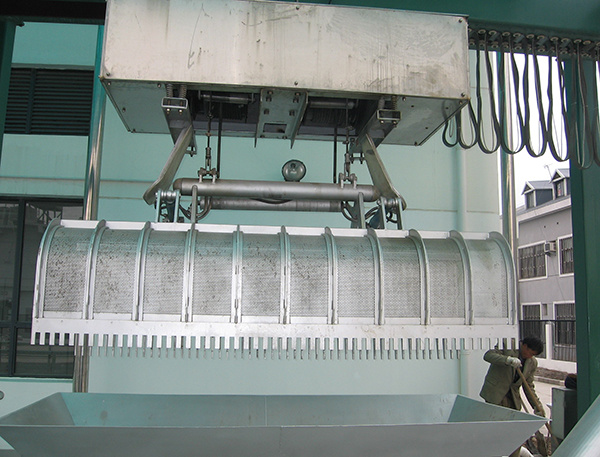


XZDQY-type mobile grab-type bar screen
Keywords: pretreatment equipment, aeration equipment
Product Description
The XZDQY‑type mobile grab‑bucket automatic trash remover, commonly referred to as a grab‑bucket screen, is typically employed in the coarse‑grit chambers of urban sewage treatment plants, large municipal stormwater pumping stations, and intake structures of water conservancy and hydropower projects. It is used to remove relatively large floating and suspended solids from wastewater or raw water. At present, it represents one of the more advanced medium‑to‑coarse‑grit screening devices in the field of environmental protection and water‑supply and drainage machinery.
Features:
● Integrates slag removal and slag conveyance into a single unit, offering comprehensive functionality.
● Small footprint, reducing capital investment.
● Low power consumption, energy-saving.
● No underwater propulsion or vulnerable components, ensuring reliable operation, minimal maintenance, and convenient servicing.
● Uses hydraulic power, resulting in low noise levels and making it suitable for urban environments.
● High workload capacity (can remove 250–3,000 kg of waste in a single operation).
● Wide service range (bar spacing can be selected between 12 and 200 mm, and the maximum well depth can reach 50 m).
● A stainless steel mesh is installed at the grab bucket to ensure thorough and clean removal of slag.
● When the grabber is open, it can pick up various types of debris, including tree trunks, oil drums, weeds, and plastic sheets.
● A single trash‑removal machine can handle debris from multiple sets of bar screens and can also be configured to serve several waste‑collection areas.
● Control achieves mechatronic integration, with a high degree of automation (and can also meet intelligent control requirements based on user needs).
● Compared with conventional multi‑unit rotary screens, it generates lower odor emissions, ensuring environmental protection and hygiene.
● The structural design is ingenious and innovative, with a sleek and elegant appearance.
Working principle
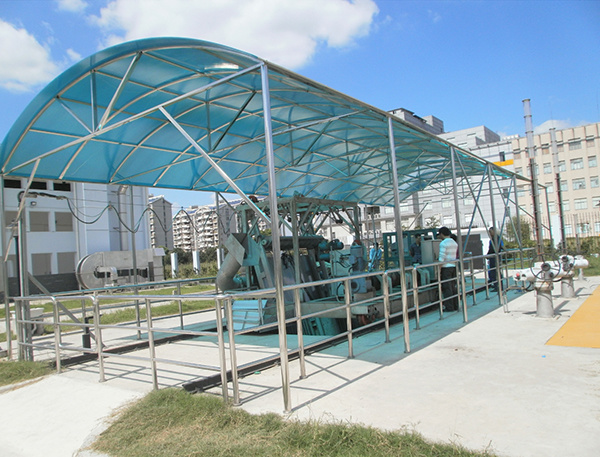
A trolley moving along the overhead track is equipped with a wire‑rope drum, from which a hydraulically operated grab—capable of opening and closing—is suspended. The grab slides down the fixed grates within the tank to collect debris or floating materials from the water. A hydraulic hose, rising and falling in sync with the wire rope, transmits commands from the trolley’s hydraulic power unit to control the grab’s opening and closing. Once the grab has collected waste and raised the rake to the top of the tank, the trolley moves to the waste‑collection hopper position, where the grab opens its jaws to discharge the collected material. Upon receiving the next collection command, the cycle repeats. The operational sequence for waste collection can be programmed and customized via a PLC.
Product Consulting
We will contact you within one working day. Please pay attention to your email.
Jiangsu Xinlang environment Co., Ltd.
Address: 58 Jinhuai Road, Weiyang Economic Development Zone, Yangzhou City, Jiangsu Province
Telephone:0514-85888833,0514-85888828
Fax: 0514-87757766
Mail:jsxlhb@vip.126.com
Follow Us

Mobile Website