

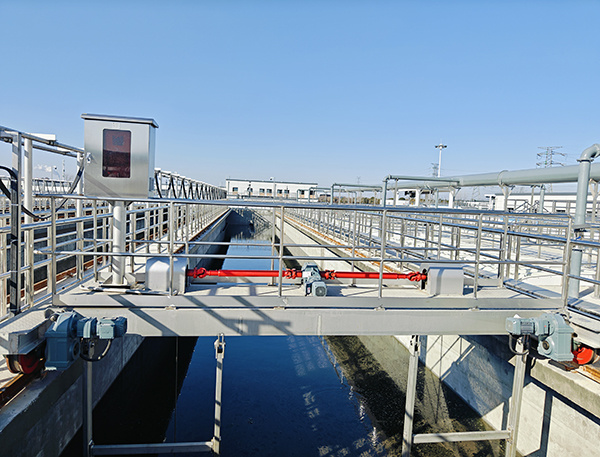
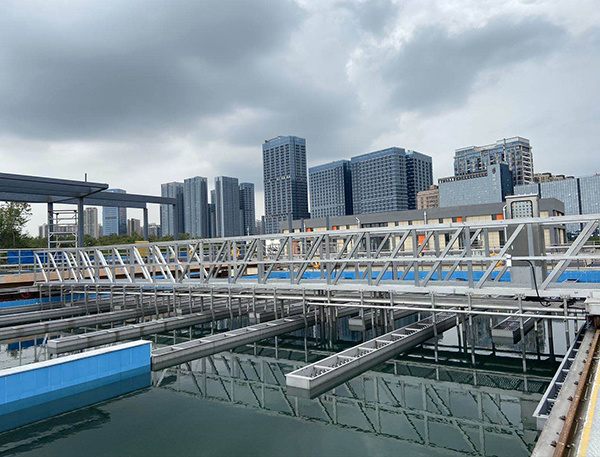
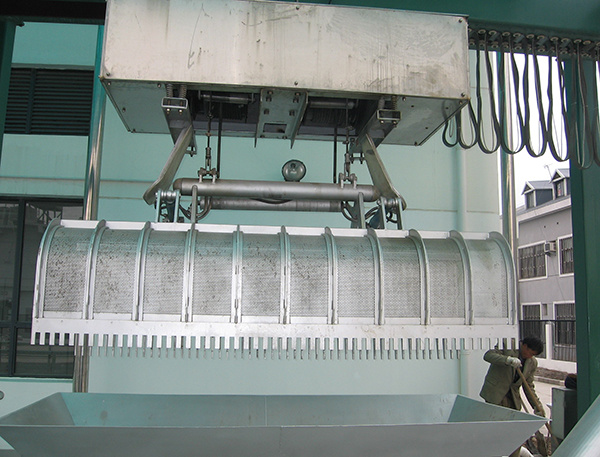
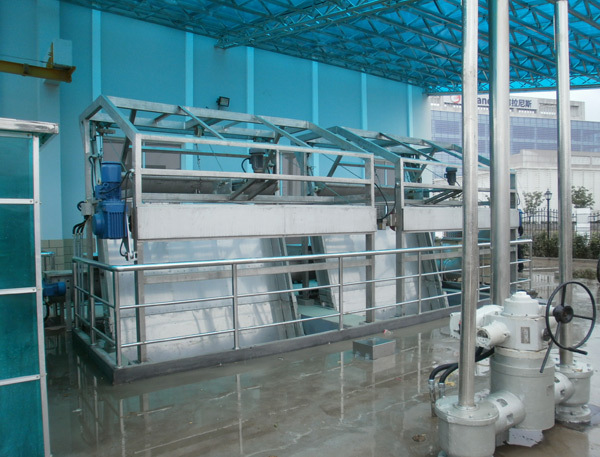
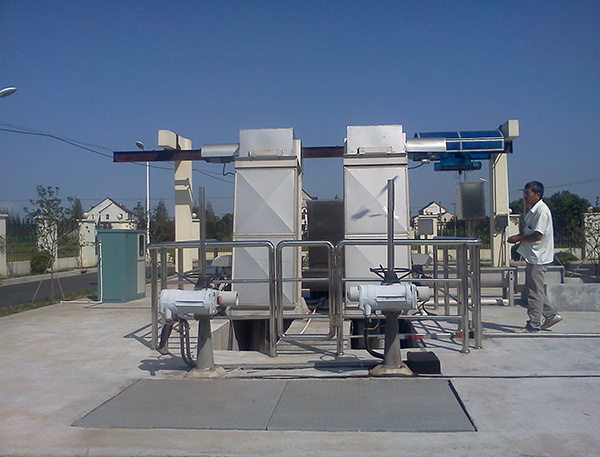
XHJG-type gantry scraper machine
Keywords: pretreatment equipment, aeration equipment
Product Description
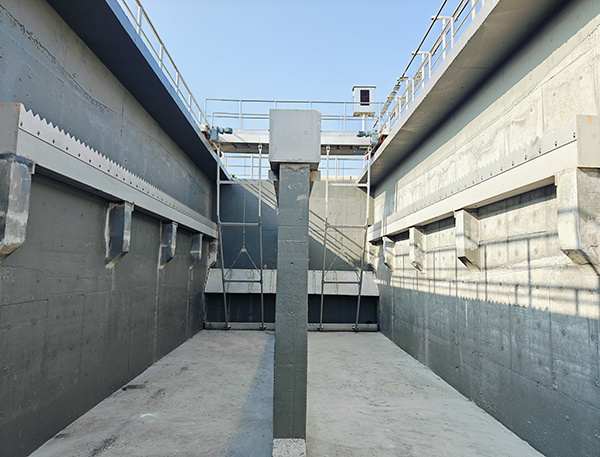
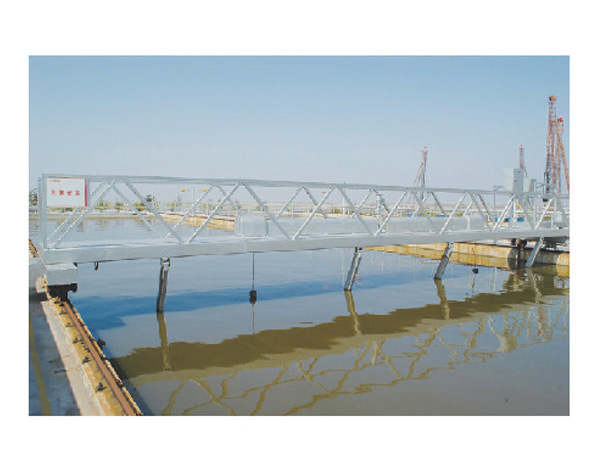
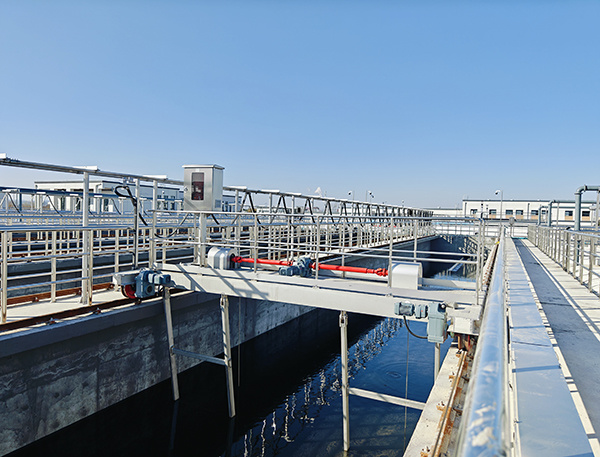
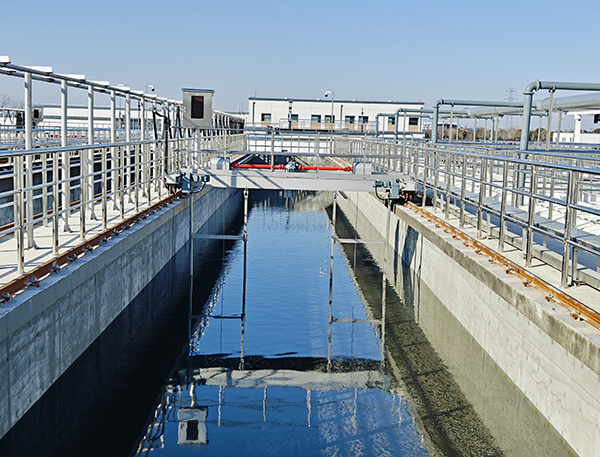
XHJG‑type truss scraper is commonly used in horizontal-flow sedimentation tanks for wastewater treatment and water supply and drainage projects. The scraper operates with a reciprocating motion, conveying the settled sludge from the tank bottom to a collection pit at one end for discharge, while inflow enters at one end and outflow exits at the other. A sludge collection trough is provided at one end of the tank bottom. Track spans typically range from 4 to 25 meters; when the tank width is substantial, it can be designed with a shared intermediate support structure for multiple tanks.
When equipped with an upper‑level oil‑skimming or foam‑removal device, its structure and functionality are similar to those of the XGYZ‑type oil‑and‑sludge skimmer.
Its characteristics:
● The hinged scraper arm automatically separates and collects layers, preventing jamming.
● A variable-speed transmission mechanism can be employed to achieve a rapid return function;
● Depending on process requirements, full-stroke or half-stroke operation can be achieved.
● Equipped with a rake‑lifting function, it can reduce the load or perform unidirectional sludge scraping.
● When the span is relatively large, a synchronous motor is typically used, eliminating rail‑climbing phenomena.
● The scraper is equipped with rubber plates and rollers, ensuring thorough and reliable sludge removal.
● Depending on the nature of the water source, the retention time can be widely adjusted (with a broad range of tank lengths).
● Wide range of applications: suitable for wastewater treatment plants, water treatment plants, steel mills, and power plants.
Working principle
Truss-type sludge scrapers typically remain stationed at the effluent end of the sedimentation tank. First, the drive‑travel reducer is started, and the scraper begins moving toward the influent end to collect sludge. Upon reaching the influent end, a limit switch on the trolley contacts a limit block, halting the reducer. The winch mechanism then lifts the scraper blade to a predetermined height, after which the travel reducer reverses direction. Once it reaches the end of its stroke, the reducer stops, and the winch lowers the scraper blade back to the tank bottom—completing one working cycle. The scraper awaits the next command and repeats this sequence, reciprocating to remove all sludge from the tank bottom and surface scum from the water surface. The sludge collected in the sludge hopper is discharged from the tank via a sludge pump (specify if a pump is required). Surface scum is removed through a pipe‑type scum collection system installed at the effluent end of the sedimentation tank (specify if such equipment is needed).
Product Consulting
We will contact you within one working day. Please pay attention to your email.
Jiangsu Xinlang environment Co., Ltd.
Address: 58 Jinhuai Road, Weiyang Economic Development Zone, Yangzhou City, Jiangsu Province
Telephone:0514-85888833,0514-85888828
Fax: 0514-87757766
Mail:jsxlhb@vip.126.com
Follow Us

Mobile Website