

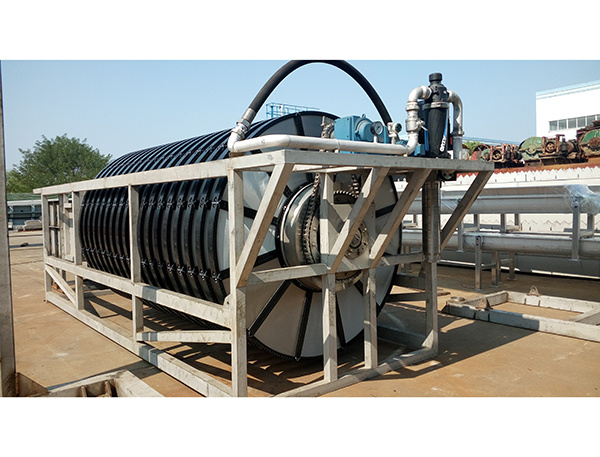
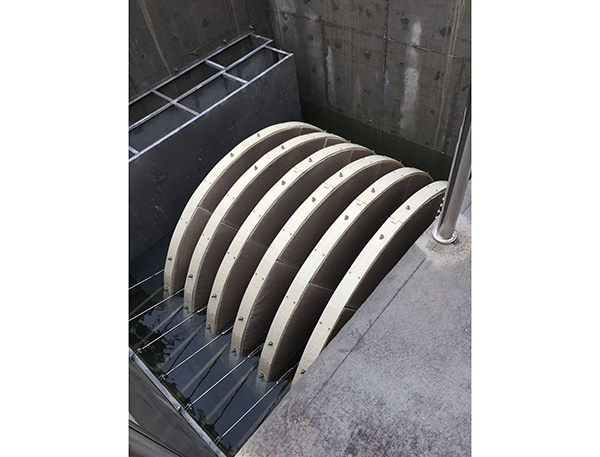
XZL-type rotary microfilter
Keywords: pretreatment equipment, aeration equipment
Product Description
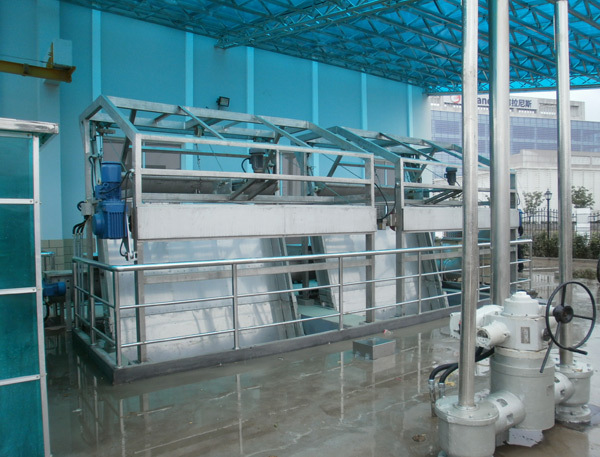
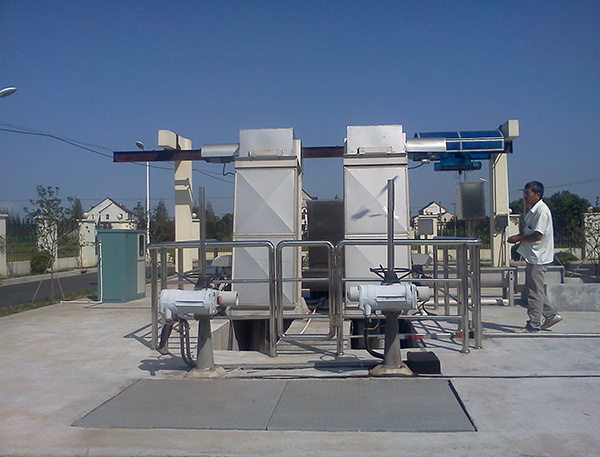
XZL Rotary Microfilter
The XZL rotary microfilter is primarily used for advanced wastewater treatment, such as upgrading and retrofitting sewage treatment plants (enabling effluent SS to be ≤10 mg/L), treating cooling circulating water in power and steel plants, and processing industrial process water in industries like papermaking and textile dyeing.
Features
The raw water can be fed by gravity through either a pipe‑type or channel‑type system, with an inward‑to‑outward flow pattern for even distribution and filtration. No separate clear‑water tank is required, resulting in a smaller footprint and lower civil‑engineering costs.
The filter cloth is made of hygienic-grade, non‑toxic, non‑polluting, algae‑resistant, environmentally friendly 316Ti stainless steel woven fabric. It features precisely defined pore sizes, a high regeneration rate, a large free filtration area, high tensile strength with minimal deformation, and a service life exceeding 15 years.
The device rotates periodically; during filtration, it typically remains stationary. As the effective filtration area on the inner side of the filter disc decreases and resistance increases, a differential pressure develops, triggering rotation and backwashing. Once the differential pressure is relieved, the device returns to a stationary state to continue filtration, ensuring that the filtration process remains uninterrupted during the rotational backwashing phase.
Since the raw water is entirely routed into the rotary microfiltration cartridge for filtration, the filter bed collects clean filtrate. Consequently, the filter bed does not require periodic backwashing during operation, and there are no effluent‑discharge control requirements in service, making operational management exceptionally straightforward.
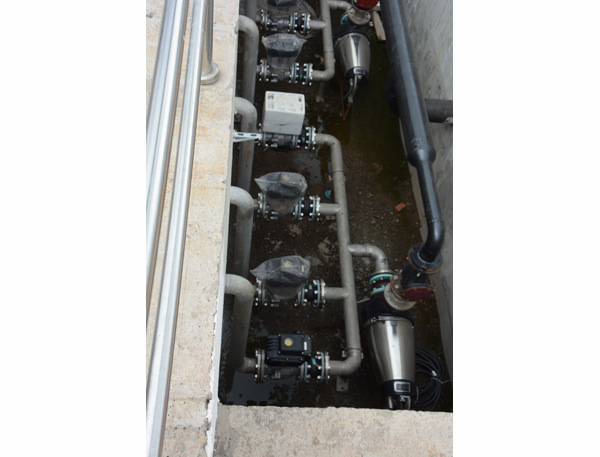
The unit employs the filtered effluent for periodic backwashing, which consumes minimal water while maintaining high efficiency, and generates a small volume of wastewater. The removal and discharge of contaminants do not affect the quality or flow rate of either the raw water or the filtered water.
Each microfiltration unit’s backwash water system requires only one electrically operated inlet gate.
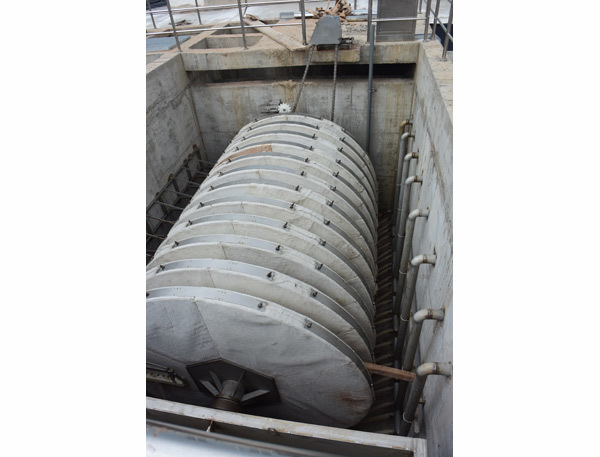
On each disc, the filter cloth is tensioned and secured to a sector‑shaped support frame by means of a clamping device. Thanks to its high tensile strength and very low coefficient of thermal expansion, the stainless‑steel fabric remains dimensionally stable; even under the influence of external flushing water pressure and fluctuations in ambient temperature, its nominal mesh size does not change. Moreover, the mechanical aging of the filter cloth is extremely slow, enabling it to withstand prolonged, continuous outdoor operation while delivering consistently stable effluent quality.
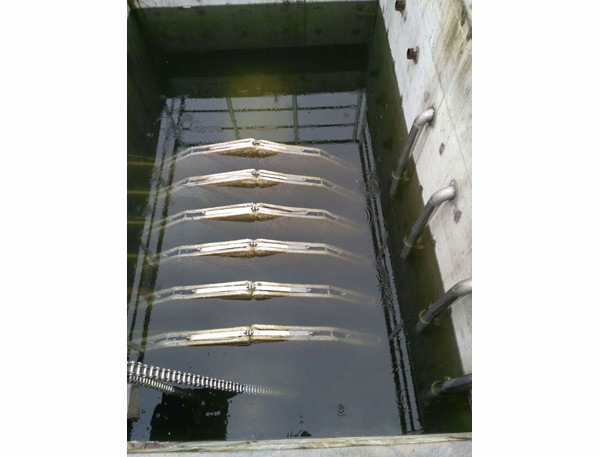
The device is equipped with a rotating disc changer that eliminates the need to drain the pool completely. Simply rotate the disc requiring replacement above the liquid surface, and the replacement can be carried out. After installation, the new disc only needs to maintain the original clearance relative to the spray bar, ensuring excellent interchangeability, convenient maintenance, and a small variety and quantity of spare parts.
The unit’s main drive motor and flushing water pump have low power consumption.
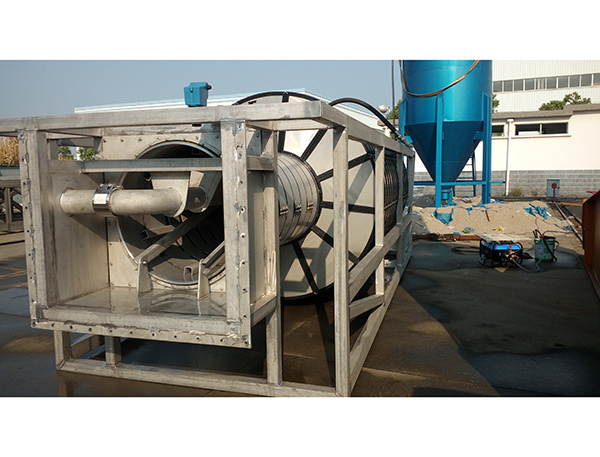
The equipment features an all-stainless-steel construction and has undergone integral pickling and passivation, offering excellent corrosion resistance and aging resistance for a long service life.
Fully automated operation, with few control points, ensuring simple and safe operation and management.
Reasonable cost-effectiveness and low operating costs.
Working principle
The rotary microfiltration process operates on the basis of a time-tested and highly efficient drum‑filtering method. The equipment consists of a series of horizontally mounted, rotatable filtration discs supported on a central shaft, with a maximum liquid‑immersed volume of up to 60%. Each disc is composed of individual stainless‑steel filter modules, each fitted with a stainless‑steel mesh screen. Wastewater flows through the screens from the inside out, and the clarified effluent exits at the unit’s discharge end. During filtration, the discs remain stationary; under gravity, solid particles settle on the screens, and over time the mesh becomes progressively clogged with intercepted solids, leading to an increasing pressure differential. Once the preset maximum pressure differential is reached, the discs begin to rotate slowly, and flushing nozzles remove the accumulated solids from the screens. A pump delivers the filtered effluent directly to the nozzles, providing the rinsing water. The resulting wash streams dissolve the retained solids, which are then discharged into a collection sump located beneath the modules, thereby returning them to the system. This cleaning operation does not interrupt the filtration process.
Product Consulting
We will contact you within one working day. Please pay attention to your email.
Jiangsu Xinlang environment Co., Ltd.
Address: 58 Jinhuai Road, Weiyang Economic Development Zone, Yangzhou City, Jiangsu Province
Telephone:0514-85888833,0514-85888828
Fax: 0514-87757766
Mail:jsxlhb@vip.126.com
Follow Us

Mobile Website